The Simonis Tapes – #1 – Improv at WORM
What is improv? A question that is akin to interpretation: like, how and why the pyramids were really built. WORM’s grogneurs, Richard Foster and Lukas Simonis, sit down on Wunderbar’s terrace with one soft drink each, and improvise about improv music. These conversations don’t follow a set structure but they give an indication of how music currently “fits” at WORM. Warning! No filter!
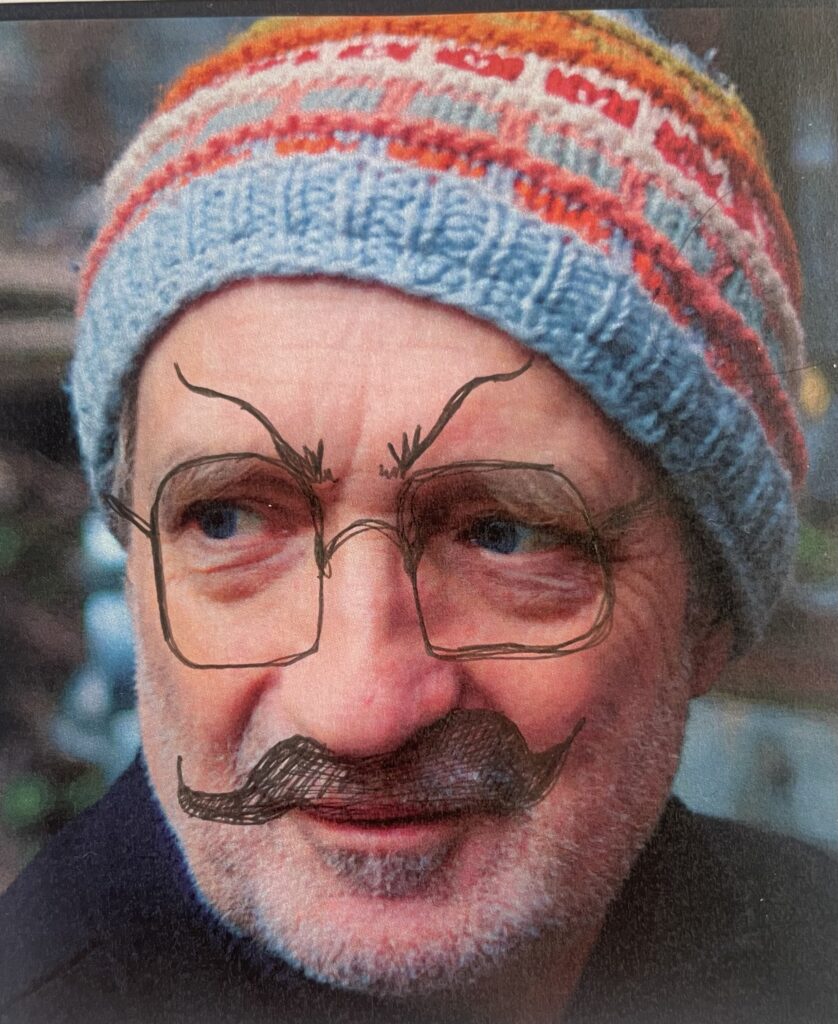
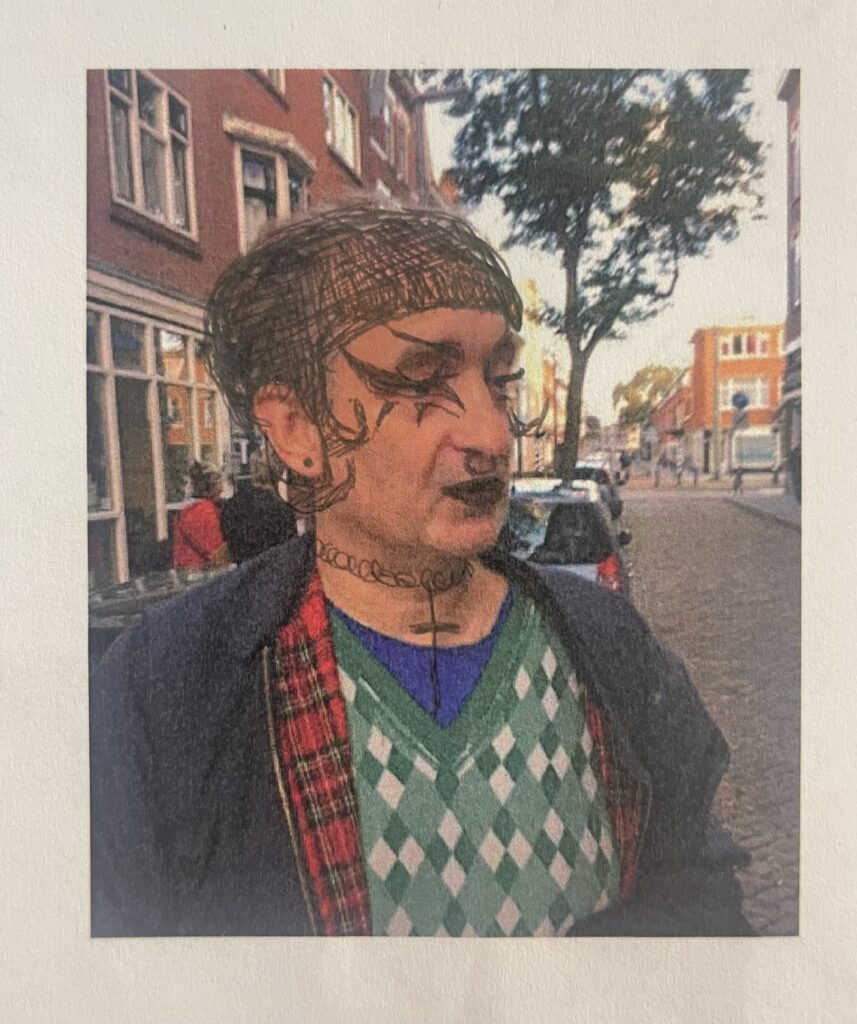
[Lukas Simonis images by Polina Sakovich, with a nod to Can’s Landed LP.]
RF: Why is WORM so good at putting on improv? What is the relationship?
LS: Originally WORM comes from Dodorama – that was a place that cherished improvisation but also new, upcoming music. After all these years, speaking personally, I don’t give a shit if it’s improv or not because in the end everything turns into a niche and it gets crystalised and there are suddenly these rules turning up, where you’re not supposed to do this, or that.
…And people from any other music genre, even from metal, they do improv and that’s cool. I mean, you have so many different things – look at the Sound Studio which is electronics; electronics is mainly improv unless you totally prepare something, and at some level that will still be improv. Or from the old laptop days where you’re just playing some files, but if you are there with a synth even if it;s modular you cannot do the same thing again and again, only a few people can do that. And that is a good thing. That’s why electronic music is still interesting.
The new world where terms don’t mean anything anymore.
Words don’t sell things anymore, jongen, images and moods sell stuff. So you can call it anything you want as nobody cares about that shit. It all comes down to two things in my view: is there a crowd who would enjoy what’s going on, and are the musicians up to it? And I am much more tolerant now, as an old fart, than when I was young, when I needed to see these good musicians. I still love seeing these old musicians but very often they do the same thing as they did when I first saw them!
Has the audience-performer dynamic changed this last decade, do you think? Because people don’t pay to see a particular performer much at a club gig much anymore. And there is a much wider, less structured idea of what cultural entertainment is now than twenty years ago.
Could be. That’s one thing. But for me, if you look back to the old days from the perspective of now, I don’t agree with the way things are going. I mean, nobody gives a fuck what I agree with, [laughs], but: as a WORM programmer of music I get these requests that say, “Ah this act, they played on Rewire or Werchter or whatever.” This kind of pitch shows how the music world is now exactly the other way round to what it was. In the old days, the smaller places had the artists first, then they went to the festivals. And now the bookers think the smaller places can have these acts because they were on the festivals!
And supposedly the bookers think because they play a sold-out festival they will get a crowd, but in a place like WORM there will be twenty-five people coming!
[Both laugh heartily.]
Is it the audience changing over time?
No, it’s the whole like-and-influencer culture.
So it’s more about human connection and a general feeling of enjoyment than people intellectually engaging?
That depends. I’m reading an English book from Jacquelline Oscamp and there’s this part about Michel Waisvisz…
Leidener!
Yeah yeah, so what. Anyway, I think I only met him once and I remember he was a really nice guy. And the thing is, that stuff he did is exactly what is good about improv music, doing fucking weird fucking stuff with things and in ways that nobody expects, and the way he collaborates with anybody, from Truus de Groot to whoever. That is for me the basic thing about improv, you’re just discovering stuff. You just go ahead!
…And this was already there with some people…
The human connection? Or the intellectual connection?
A bit of both. The other thing is the whole improv scene I think slightly suffers from the very successful – how should we call it? – the Dutch swing scene? Mainly from Amsterdam, that Mengelberg and Bennink and Breuker scene. It’s slightly jazz related but even so, Mengelberg and Bennink did lots of great stuff. But that scene still lingers on and on. Which is great: you should not stop making music if you’re what, as old as they are, but it’s still the centre of attention for others. And that’s a shame, I think.
Is there an issue with age at the moment?
I know for sure that if you do improv you can do it until a very old age which is good.
No, I mean people coming through – I feel the way that young musicians come through now, they are treated like they are on a conveyor belt at the conservatories, whereas Han Bennink would never have been treated like that, or stood for being on a conveyor belt.
Yeah, but I don’t think that’s the biggest problem. Mengelberg went through stuff like that. I think improv is overrated as a genre. Because in my view, improv is just a way of treating stuff. If we talk about improv in rock music I would go to the krauts. It was basically improv music.
Let’s turn back to WORM , why do you think WORM is the place people expect improv music? You don’t see it much elsewhere in the city…
A bit, possibly; small places like Koffie en Ambacht and small places where students are eager to do some improv, even if they don’t know what they’re doing but that’s totally cool, you have to start somewhere.
…I think it’s still music with a sense of freedom, and also stupid, in a Fluxus kind of way, that should be there. If you go, ‘oh, this and this theory, and huppledepup’ it still comes back to what someone is playing in one moment.
It’s very reductive music then? Even if lots of improv musicians can really play their instruments. But you have to find a way to connect with the people watching, you can’t escape that can you?
No.
And that being in WORM is somewhere where people are open for that kind of thing…
The people that turn up, yes…
[Both laugh heartily.]
But the thing is, and this is my personal theory I have evolved through the years… one of the first concerts I ever did wasn’t at WORM but was at the Jazzbunker. It was a cooperation with Bimhuis, it was like a Dutch music meeting, and I had this concert and they gave the artists, they were… Van Hoven, you know the pianist, and Guus Jansen, and Jacques Palinckx and John Zorn, and Evan Parker and one I forgot… And it was a brilliant gig but very badly organised; we didn’t make food for them and they were very hungry. That was the one occasion I spoke with John Zorn. He was very hungry. And anyway I thought it was one of the best things I ever heard.
…Anyway I had a talk with someone about Evan Parker and his stuff, his circular breathing for half an hour. And is that improv music? I don’t think so, it’s just a brand, maaaaan.
A legacy thing, that’s what is happening now. If these people were on a big festival they would be treated like royalty because people want to see the legacy act for their money. They don’t want the unexpected. Otherwise it’s not bookable. So these people are trapped, in a way, trapped by their own improv.
…The improv trap.
You know Klaas Gubbels?
Yeah.
It’s the same thing, really, and people still like it and appreciate it.
But there is one element of improv I think is peculiarly WORM. And that is captured by something like the Les Harry’s gig. That’s in my top three gigs of all time. Nearly as good as Echo & the Bunnymen in 1988. And that was a kind of improv moment you couldn’t imagine anywhere else but WORM.
…Let’s use the word unexpected music.
For me that hasn’t have so much to do with improv. But yeah, it was really nice [read the story here] they were a bunch of autistic musicians from Paris and a bunch of radio makers from Paris, and the people from Sonic Protest and I got together some musicians here, Janneke van der Putten, Yuri Landeman, myself, some others, anyway, the thing was, it was really funny; the first time we played with them, they improvised. But after the first improvisation they did exactly the same! They totally remembered what they did the first time around. Which we couldn’t do, but they could.
But that’s the thing! WORM is the place where unexpected things happen. Even if it’s something you’ve already experienced.
Yes, but the Electric Umbrella series is really improv at WORM. And so are the cooperations with Studio Coope and Space is the Place. And it’s in the room.
Like our old WORM friend Evicshen says: the more people retreat into the digital world, the more I become physical in my work.
Yeah, very good. You just have to turn up. This is the stuff I appreciate more and more.