Filmwerkplaats workshop Analog Animation
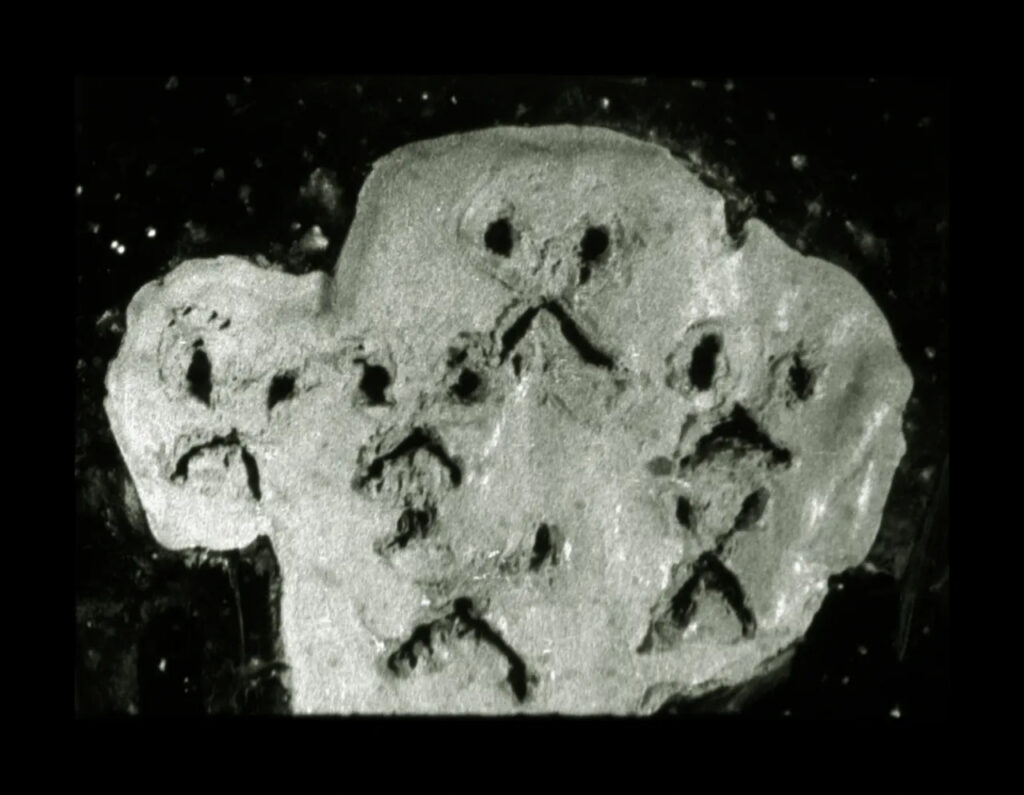
Location: WORM
Date: 20-21 June 2026 (Saturday-Sunday)
Time: 11.00 – 18.00 both days
In this 2-day workshop we will concentrate on four different animation techniques namely; multiplane, pixilation, stop-motion and direct animation techniques. Of course we will exploit these techniques in the spirit of the Filmwerkplaats: experimental, on analog film, hands-on and DIY. We will use several of our 16mm Bolex cameras, the animation/timelaps motor and film with B&W stock; both high-con (25 asa 3378) as camera negative (Foma Cine 100). The workshop is divided in different slots in which we will explore the covered techniques to the fullest. We will work in teams, so you will end up with some results that will inspire you to explore after the workshop on your own.
We have acces to both our Filmwerkplaats lab as the UBIK theater space and will also film outside. We will use a.o. DIY options to create the necessary devices/stands (so you can easily build your own at home), and play with light effects on objects with regular household lighting.
The covered animation techniques:
Multiplane-stand is a construction consisting of several layers with glass-plates placed in different heights. The tool is used to create depth by placing different elements in the different layers. The camera is mounted above the glass-plates and captures with this position the setup and image as three-dimensional.
Pixilation is an in-camera filmmaking technique where live actors and objects are shot frame-by-frame to simulate movement. This results in an animated-looking world, where a human or living creators, and the things around them, move without being touched. The actual can often appear jerky or smooth, depending on gaps of motion between in each frame.
Stadsgeest – Orthodogs
https://www.youtube.com/watch?v=BsvbbWtHUSs
Stop-motion is a technique in which objects or ‘stuff’ are physically manipulated in small increments between individually photographed frames so that they appear as if they’re moving when played back at normal speed. Any kind of object or ‘stuff’ can thus be animated.
Direct animation also known as cameraless animation or drawn-on-film animation, is a filmmaking technique where the artist creates visuals directly onto physical film stock. Instead of photographing drawings or objects frame by frame with a camera, the animator manually draws, paints, or scratches onto the celluloid (example: Norman McLaren – Dots)
Daphne Rosenthal digs with her camera through sceneries built with all sorts of stuff. Her objects come from unclear origins and have a destination unknown. She manipulates these objects using animation and puppet techniques. They move around, they roll, fall, squeeze and tremble. It seems as though they respond to each other and such tactile movements resonate in our body. Rosenthal uses animation to engender a sense of agency to materials. She works in the zone where life seems to begin, possibly ends and can start anew. In her latest works Rosenthal uses a multiplane-set with layers of materials in unconventional ways. Moving collages are built up from clay, scraps of paper, fabrics and various small objects. Often photographic footage is added to open up tp questions of cinematic space and its narrative.
Daphne Rosenthal (1979) is an artist-filmmaker who lives and works in Amsterdam (Gerrit Rietveld Academie – VAV – 2008) and has strong ties with Los Angeles (CalArts – MFA Experimental Animation – 2014). Her work has been shown in galleries and festivals internationally.